
GET INVOLVED!
Want to be among the first to hear directly from us about our work? Sign up now.
We are MFI
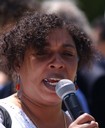 Celia Brown Celia Brown | Celia (1963-2022) was a psychiatric survivor and leader in the movement for human rights in mental health. Celia served on the MFI board for several years, including as MFI president. Celia led MFI's United Nations team and International committee. Celia is shown here speaking at an MFI protest directly in front of the American Psychiatric Association Annual Meeting. (Photo by Tom Olin) |
 Jay Mahler Jay Mahler |
Jay is a survivor of forced electroshock who spent ten years in the mental health system. He is now a widely respected leader in California, where he founded Mental Health Consumer Concerns and the California Network of Mental Health Clients. Jay is pictured here at a MindFreedom strategy conference at Highlander. (Photo by Tom Olin.) |
 Rae Unzicker Rae Unzicker |
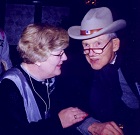
Rae (1948-2001) was a psychiatric survivor activist who was a key bridge-builder between the entire disability movement and our movement to change the mentalh health system. Rae championed the National Council on Disability (NCD) report, From Privileges to Rights: People Labeled with Psychiatric Disabilities Speaking For Themselves. Rae is shown here with her beloved Justin Dart (1930 - 2002), widely considered one of the key disability activists of the last century, and also a bridge builder between our movements. Both Rae and Justin were MFI members. (Photo by Cookie Gant) |
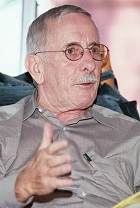 Loren Mosher Loren Mosher | Loren (1933 - 2004) was a dissident psychiatrist who founded Soteria House, a commonsense alternative to the forced psychiatric drugging of the mental health system. Loren was a MindFreedom board member, and an ally to psychiatric survivor activists. (Photo by Tom Olin at an MFI international strategy conference at Highlander.) |
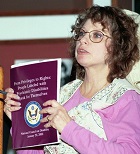 Judi Chamberlin Judi Chamberlin |
Judi (1944 to 2010) was one of the most effective international psychiatric survivor activists. Judi is shown here holding the National Council on Disability report From Privileges to Rights, which her good friend the late Rae Unzicker helped create. Judi served for years on the MFI board. (Photo by Tom Olin) |
 Vesper Moore Vesper Moore | Vesper is an international psychiatric survivor and disability rights activist. Vesper serves on the board of MFI and is a widely recognized leader in the psychiatric survivor movement. Vesper fights against violence in psychiatric institutions around the world as a consultant to the United Nations Convention on the Rights of Persons with Disabilities. They are also a member of the White House Disabled Stakeholders Group and many other national groups fighting for abolition and systems change. |
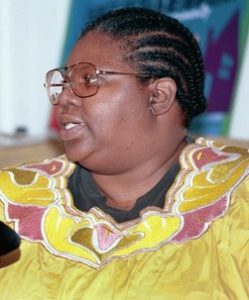 Cookie Gant Cookie Gant | Cookie (1949 - 2003) was a founder of MindFreedom International's coalition, and was a rolling coalition herself: African American lesbian disabled psychiatric survivor artist photographer! Cookie served on the MFI board for several years, and co-founded MindFreedom Michigan. (Photo by Tom Olin at an MFI international strategy conference.) |
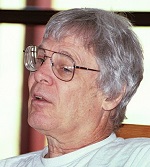 Ted Chabasinski Ted Chabasinski |
Ted received electroshock at the age of six, and spent 10 years of his youth locked up inside a state psychiatric institution. He became a psychiatric survivor movement leader in 1971, and later became an attorney. He has served on the board of MindFreedom International for several years. (Photo by Tom Olin) |
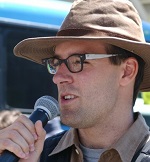 Matt Morrissey Matt Morrissey |
Matt Morrissey is on the MFI Choice in Mental Health Campaign Committee. Matt directs the adult day program at Full Spectrum Progressive Mental Health, which is a nonprofit center in San Francisco that offers voluntary programs for adults and adolescents in severe emotional distress. Full Spectrum is a Sponsor Group in MFI. Matt is shown here speaking at an MFI co-sponsored protest in front of the American Psychiatric Association. (Photo by Tom Olin) |
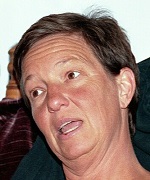 Kris Yates Kris Yates |
Kris experienced forced electroshock while locked up in a psychiatric institution in India. Kris became an MFI leader, and is shown here at a Highlander strategy conference. A powerful story teller from a poor Appalachian background, Kris obtained her master's degree and became accredited as a family counselor in California. Her practice specializes in nondrug voluntary and humane alternatives for people labeled with psychiatric disabilities. (Photo by Tom Olin.) |
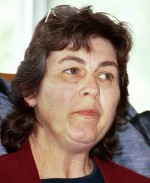 Mary Ann Ebert Mary Ann Ebert |
Mary Ann Ebert of Mental Patients Liberation Alliance of Syracuse helped found MindFreedom International's Support Coalition and provided early technical assistance to get it off the ground. Mary Ann has worked for decades to support human rights and alternatives of people in the mental health system. (Photo by Tom Olin.) |
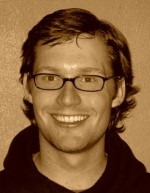 Gabriel Hadd Gabriel Hadd |
MFI Shield issued a public alert that young musician and artist Gabe Hadd was under court-ordered involuntary outpatient psychiatric drugging in Michigan. Members in Colorado offered personal support. Gabe successfully escaped over state lines and evaded the forced psychiatric drugging in his own home. You can hear Gabe's music at www.myspace.com/gabrielhadd. |
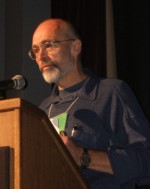 Hugh Massengill Hugh Massengill |
Hugh Massengill, psychiatric survivor and MFI member, addresses opening session of City of Eugene, Oregon, USA conference on Choice in Mental Health Care as a Human Right at the University of Oregon. |
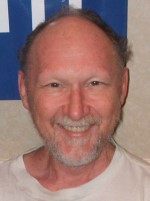 Tom Wittick Tom Wittick |
Thomas E. Wittick is an MFI member who named one of the first psychiatric rights movement activist groups in this era in the USA. Tom chose the name "Insane Liberation Front" for the influential group that began in Portland, Oregon, USA in 1970, and he organized along side the infamous Howie T. Harp. Tom is shown here at the MindFreedom Action Space inside the Alternatives 2006 Conference in Portland, Oregon. |
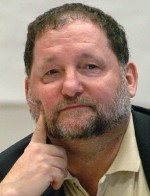 Jim Gottstein Jim Gottstein |
Jim Gottstein is a psychiatric survivor who is also a Harvard-trained attorney, and founder of MindFreedom Sponsor Group PsychRights. Jim blew the whistle on Eli Lilly by releasing their secret documents about the psychiatric drug Zyprexa to The New York Times. Jim is also president of National Association of Rights Protection and Advocacy (NARPA) a founding Sponsor Group of MFI. |
 Laura Prescott Laura Prescott |
Laura Prescott is the President and founder of Sister Witness International Incorporated. The organization focuses on addressing the multiple forms of violence and retraumatization in the lives of women and girls who have been institutionalized in psychiatric and criminal justice settings. |
 Dorothy Dundas Dorothy Dundas |
While institutionalized for three years as an adolescent in the 1960's, MindFreedom member Dorothy Washburn Dundas was labeled a "schizophrenic" and forced to undergo 40 combined insulin coma-electroshock "treatments." Dorothy says, "I experienced and witnessed many atrocities. I believe that luck, determination, and my own anger and one compassionate advocate were my best friends on the road to my ultimate survival and freedom." Through a number of op-ed pieces, she has voiced her opposition to abusive psychiatric practices. Her poster, "Behind Locked Doors," which she created from her hospital records, is used in training programs. Dorothy lives in the Boston area where she has raised her four wonderful children. She founded and is the sole driver in her "safe, friendly and reliable" car service called The Crystal Lake Express. |
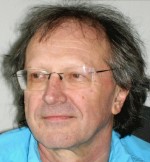 Peter Lehmann Peter Lehmann |
Peter Lehmann of Berlin, Germany serves as one of the MindFreedom International representatives with the United Nations, and is a long-term supporter of MindFreedom campaigns and activities. Peter is a psychiatric survivor who has worked passionately for decades in Germany, Europe and internationally with a variety of groups for significant change in the mental health system. Peter is editor and publisher of a variety of books challenging human rights violations in the mental health system and promoting alternatives. His most recent book (co-edited with Peter Stastny, MD) is called "Alternatives Beyond Psychiatry." This book provides chapters from 61 leaders in changing the mental health system, and is available in the MindFreedom Mad Market. |
 Lauren Tenney Lauren Tenney |
First involuntarily institutionalized, at 15, Lauren Tenney is a survivor of psychiatry. She has been involved with the user and survivor movement since 1992. Her goal is to help stop forced psychiatric procedures, detainment, and confinement, human rights violations, psychiatric abuse and torture. Of particular concern are the elimination of forced electroconvulsive treatment (ECT) on people of all ages, but particularly children and senior citizens, forced drugging, restraints, seclusion, behavioral interventions, and coercion of any kind. Lauren, a Mad-Activist/ Artist/ Author/ Academic/ Adjunct Professor is coordinating The Opal Project, an outcome of participatory action research she coordinated for field research in the PhD program in Environmental Psychology at the Graduate Center, CUNY. Her dissertation topic is: "The Institutionalized "Community." She became involved with WE THE PEOPLE when the Law Project for Psychiatric Rights and MindFreedom International needed someone on the ground in Brooklyn, New York to coordinate a response where Esmin Green was murdered-by-neglect. She now lives in Albany, NY with her service dog-in-training and cat. For more info: www.TheOpalProject.org and www.etrash.tv |
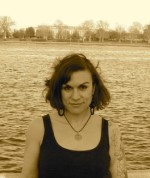 Leah Harris Leah Harris |
Leah Harris, a second generation psychiatric survivor, discovered MindFreedom in 2000 when she was 25 years old. Her first act in the mad movement was to tell her story of oppression and resistance, and to help edit stories for MindFreedom's Oral History Project. Since then, she has been working in various ways to help achieve the vision of MindFreedom: an end to all forms of psychiatric oppression, healing of all forms of "normality," and the creation of vibrant, colorful communities that honor and celebrate diversity, difference, and the full range of human experience. |
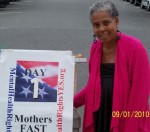 Cindi Fisher Cindi Fisher |
Cindi Fisher has fought for years for her son, who has experienced forced psychiatric drugging and other human rights violations in the State of Washington. She has even held protest fasts on her son's behalf (see photo of Day One). Cindi says: "In the past, advocating for my 33-year-old psychiatric survivor son over the years has been very frustrating and has sometimes felt hopeless! Now, as a member of MindFreedom, I feel I have the voice of thousands to join me. My effectiveness and awareness as an advocate has indeed multiplied a thousand times. Thank you David and MindFreedom for your many years of work to build such a powerful and empowering organization!" |
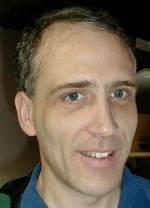 Ron Unger Ron Unger |
Ron Unger LCSW is both an human rights activist and a therapist who specializes in alternative approaches for "psychosis." Said Ron, "As a young person, I had my own experiences that could have been labeled 'psychotic' but got through them without mental health system intervention. I am proud to be a member of MindFreedom, the world's leading coalition fighting for radical reform in the mental health system!" Ron created MFI's "Truth Injection Campaign." You can find out more about Ron's views on his blog [see 'related content' link below image view]. |
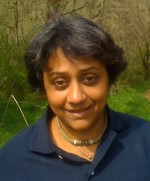 Bhargavi Davar, PhD Bhargavi Davar, PhD |
Bhargavi Davar is a survivor of psychiatric institutions who is working in Pune, India, with a Ph. D. in the philosophy of psychiatry. Dr. Davar is an author of several books and articles critiquing the foundations of psychiatry in India. She said, "MFI has been a great source of inspiration for us in India, particularly the unique international efforts in consistent reporting on globalising psychiatry as an EMERGENCY." |
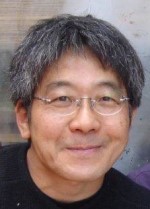 Tsuyoshi Matsuo, MD Tsuyoshi Matsuo, MD |
Tsuyoshi Matsuo is a physician who worked in a psychiatric institution in Japan for four years and witnessed how terribly the patients are treated. Dr. Matsuo said he was glad to be an MFI member, "Because I believe MFI is trying to straighten out the mental health system which is insane. I'm proud to be part of the movement to straighten it out!" |
 Loretta Wilson Loretta Wilson |
I joined MindFreedom after learning about the Ray Sandford campaign. It was so good to find a group with a common goal. Feeling the support, knowing I'm not alone has been very comforting. It was such a relief to find this organization. Keep up the good work! I am a survivor of 58 electroshocks with a strong desire to see electroshock abolished. I am willing to talk to anyone who is willing to listen. I have even talked to some who don't want to hear about it! I had post-procedure pain from my electroshock. I struggle daily with memory loss from electroshock. I am 69 years old, widowed, mother of 5, grandmother of 7 and great grandma to my new baby girl, 'Sophie.' She's beautiful! |
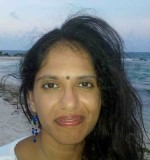 Geetha Rathnamala Geetha Rathnamala |
Geetha says, "I am an Indian-American psychiatric survivor from Pittsburgh, Pennsylvania. I am proud to be a MFI member because I believe in the power of individuals working together to bring about a better world in which uniqueness, fundamental human rights, and different states of consciousness are treasured." MindFreedom launched a MindFreedom Shield campaign against the involuntary psychiatric drugging and lock-up that Geetha experienced in 2010. |
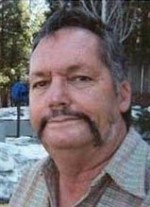 Chuck Hughes Chuck Hughes |
"I find inspiration and mental support in MindFreedom," says Chuck. "I like associating with like-minded activists for human rights in mental health. When I go into a Board or Commission and say I am a member of MindFreedom International. It gives what I say a lot more validity and my voice carries a lot farther. My first of eight involuntarily institutionalizations was at age 23. I have witnessed much injustice in mental health. I have been involved with the user and survivor movement since 1992. My goal is to help stop forced outpatient psychiatric procedures, seclusion, restraints and other human rights violations, psychiatric abuse and torture. Of particular concern is the elimination of forced electroconvulsive treatment (ECT) on people of all ages." |
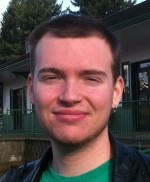 Levi Chambers Levi Chambers |
Levi Chambers is a sociology student, organizer, and psychiatric survivor working toward mental health justice in Olympia, Washington. He said: "I am a member of MFI because the organization fights for my rights more effectively than groups with funding from big pharma. My family and I stopped supporting those groups, and have been MFI fans ever since." Levi believes in community mental support, non-pathological and non-chemical treatment alternatives, and declines to use psychiatric labels. Currently a 22-year-old college student involved in the Icarus Project and a member of MindFreedom International, Levi hopes to become a researcher who works to gain scientific acknowledgment for alternative recovery models. If you would like to work with Levi to fight discrimination, build alternatives to conventional psychiatry, and demand a non-violent revolution in mental health in Washington State, please contact him. |
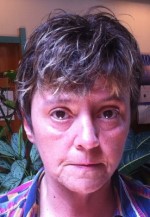 Lynne Salvi Lynne Salvi |
Lynne M. Salvi [1963 - 2011] was an activist with MindFreedom Lane County. She experienced 24 years of human rights violations in the mental health system. Lynne said, "Since finding MindFreedom and becoming a member, my life changed dramatically. I found many people who understand through experience without words. MindFreedom feels like a reunion of family I never knew before. This connection and encouragement give me the courage to speak out. I am grateful to find myself using those painful experiences to help others. Today I am medication-free and psychiatrist-free for the first time." See "Related Content" below for writing by Lynne. |
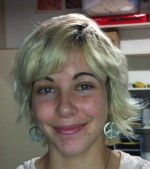 Samantha Johnson Samantha Johnson |
Samantha Johnson is a 22-year-old psychiatric survivor who is interning at the MindFreedom International office. "I was absolutely in disbelief at how the people were treated at the hospital. It was an environment of emotional abuse interspersed with 'treatments' and 'policies' that could be more accurately described as assault. The tragic thing is that there really are some good people working there, but they are unable to provide people with the help they need inside a system that prioritizes profits over people. It might take five years of counseling for someone to truly recover from a mental health crisis, but it takes five minutes to tranquilize them. This is why I started working with MindFreedom. For 25 years MFI has been challenging the mental health system to see us as human beings- to treat us as human beings- through peaceful activism. At MFI we emphasize individual choice, empowerment, and compassion as necessary aspects of a true healing process." |
 Paula Joan Caplan, PhD Paula Joan Caplan, PhD |
Paula Caplan, PhD: Psychologist, author, playwright and activist who is challenging the harm caused by psychiatric labeling. Paula is a long-time member of MindFreedom International. Author of 12 nonfiction books. Her latest book, "When Johnny and Jane Come Marching Home: How All of Us Can Help Veterans," uncovers the way too many people traumatized by war are told that that makes them “mentally ill.” Her book won the 2011 American Publishers Award for Professional and Scholarly Excellence (PROSE Award) in the Psychology category. |
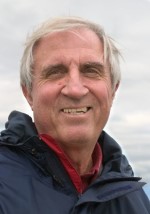 Al Galves, Phd Al Galves, Phd |
Al Galves of New Mexico is an author, retired psychologist and long-time activist for human rights and humane alternatives in the mental health system. He is on the Board of Directors of MindFreedom International, and now director of an MFI Sponsor Group, International Society for Ethical Psychiatry and Psychology (ISEPP). |
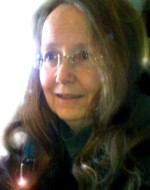 Amy Smith Amy Smith |
From her home in Colorado, Amy Smith provides leadership for the movement to change the mental health system in a variety of ways, from events to art work for the Occupy American Psychiatric Association peaceful protests by MindFreedom International. Amy is a psychiatric survivor, who has been psych drug-free since 2008. She is the former director of Colorado’s statewide consumer organization, and the creator of RISE University, an education program designed to illuminate the experience of labeled individuals and their families. |
 Caitlin Belforti Caitlin Belforti |
Caitlin is a survivor of maltreatment of Adelphi University's student counseling center. A young adult new to the movement, Caitlin hopes to continue to her involvement in the psychiatric survivor movement and bring more attention to an issue that is all too prevalent and all too ignored. Also an actress and a poet, Caitlin hopes to use the medium of performing arts to spread awareness, and to reach fellow survivors. She says, “Many thanks to the support I have received so far from the cool crowd that is MindFreedom!" Caitlin is speaking at the MindFreedom International peaceful protest of the American Psychiatric Association in Philadelphia, OccupyAPA 2012. |
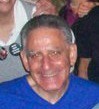 Harry Bentivegna Lichtenstein Harry Bentivegna Lichtenstein |
Harry is a MindFreedom Member and coordinator of MindFreedom NYC affiliate. He is a New York City poet, runner, health enthusiast, teacher, and employee of Gary Null & Associates in Manhattan. He received his MS from Howard University, Washington, DC and BA from Hunter College, CUNY. |
 Dan L. Edmunds, EdD Dan L. Edmunds, EdD |
Dr. Dan L. Edmunds is a psychotherapist specializing in drug free relational approaches for autism and developmental differences and extreme states of mind. He is the founder of the Center for Humane Psychiatry, an emancipatory movement for human rights in the mental health system. Dr. Edmunds is speaking at the MindFreedom International protest of the American Psychiatric Association in Philadelphia on 5 May 2012. |
 Aki Imai Aki Imai |
Aki Imai is a 25 years-old Japanese graduate student who studies Clinical Psychology in Ohio. In conjunction with MindFreedom International, Aki launched a submission-based blog, Life After Labels for people to submit stories about overcoming difficulties in receiving psychiatric diagnoses. Aki spoke at the 5 May 2012 Occupy APA peaceful protest of the American Psychiatric Association. |
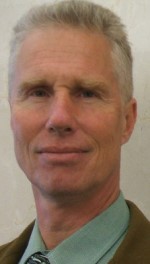 Frank Blankenship Frank Blankenship |
Frank is a long-time activist, blogger and protester for human rights in the mental health system, and founder of MindFreedom Florida. Frank chairs the MFI Affiliate Support Committee. Check out his blog Lunatic Fringe, highly critical of the mental health industry abuses. |
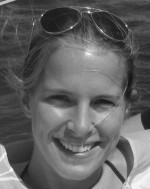 Laura Delano Laura Delano |
Laura works as a peer specialist in the traditional mental health system and writes a blog at madinamerica.com, where she is sharing her story of recovery from psychiatry. After living with psychiatric labels for 13 years and taking psychotropic medications for ten of them, Laura says she found liberation in 2010 from her psychiatric diagnoses, from her reliance upon the mental health system, and from the once deep-seated belief that she was sentenced to a life-long "mental illness." Laura says, "I am proud to be a member of the MindFreedom International community for all MFI does to promote equality, justice, and civil rights for people who have been labeled 'mentally ill.'" (See 'Related Content' links below for link to Mad In America web site where Laura's blogs.) |
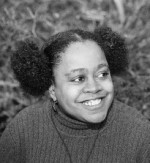 LaTonya Gibbs LaTonya Gibbs |
LaTonya says, "I love working for such an 'insanely supportive' organization. MindFreedom is a touchstone for a lot of different commissions that are fighting for human rights, both locally and internationally. This is also an office that practices what it preaches. The director and staff are intent on not letting its members or it's employees lose themselves while trying to 'make a living', if we can help it. We're all human beings and that comes first here." LaTonya works in the MindFreedom office and is a mental health consumer. |
NEWS
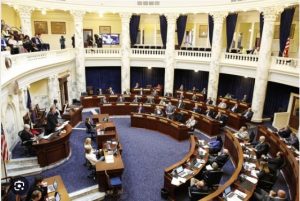
Harmful legislation alert: Oppose Idaho bill allowing 12-year-olds to be electroshocked
Update: Revised Bill Passes April 2, 2024. The amended bill passed both the House and then the Senate. Update: Not Dead Yet? March 28, 2024. There was a series of procedural moves resulting in an amendment to S1254 that allows electroshocking children down to age 14, but imposes a lot of requirements. (2) Electroconvulsive therapy…
Read More
Shield alert: And Steiner forced to endure assault at institution in Boston, MA, USA after reporting patient abuse and transgender discrimination
Update: March 21st, 2024 Latest News 1. Positive developments In response to a series of emails addressed to the Massachusetts Department of Mental Health (DMH) and their Adult Clinical Community Services (ACCS), in which And Steiner (pronouns: it/its) and its many advocates expressed concern about DMH’s plans to forcibly and prematurely discharge And…
Read More
Judi’s Room to present a conversation with Rob Wipond on April 3rd 2024
You’re invited to join us for the third Judi’s Room of 2024! Event Details • Topic: A conversation about involuntary commitment with Rob Wipond • Date: Wednesday, April 3rd 2024 • Time: 3 PM Pacific | 4 PM Mountain | 5 PM Central | 6 PM Eastern & Atlantic Standard | 6 AM Eastern Australia…
Read MoreMonthly MindFreedom Update: March 2024
Update for the Month of March 2024 by Board President Al Galves New Board Members We have two new Board members: Dina Tyler in California and Kristina “KK” Kapp in Ohio. Dina Tyler is an individual and family counselor in private practice. She specializes in extreme states of consciousness often labeled as psychosis…
Read More
MFI member in Bangladesh launches website to locally promote human rights
Monirul, a member of MindFreedom International who lives in Bangladesh, has created a new website called MindfulRights at https://www.mindfulrights.rf.gd in order to promote human rights in various fields in Bangladesh including mental health care and to raise public awareness of related issues within the country. Although the site is still a work in progress, it…
Read MoreMonthly MindFreedom Update: February 2024
Update for the Month of February 2024 by Board President Al Galves Shield Program We are working on two active Shield campaigns: 1. Dawn Dziuba (pronouns: she/her) is an attorney who has been forcibly held at Forensic Treatment Center South in St. Louis, Missouri for nine years. She believed that her colleagues at…
Read More